

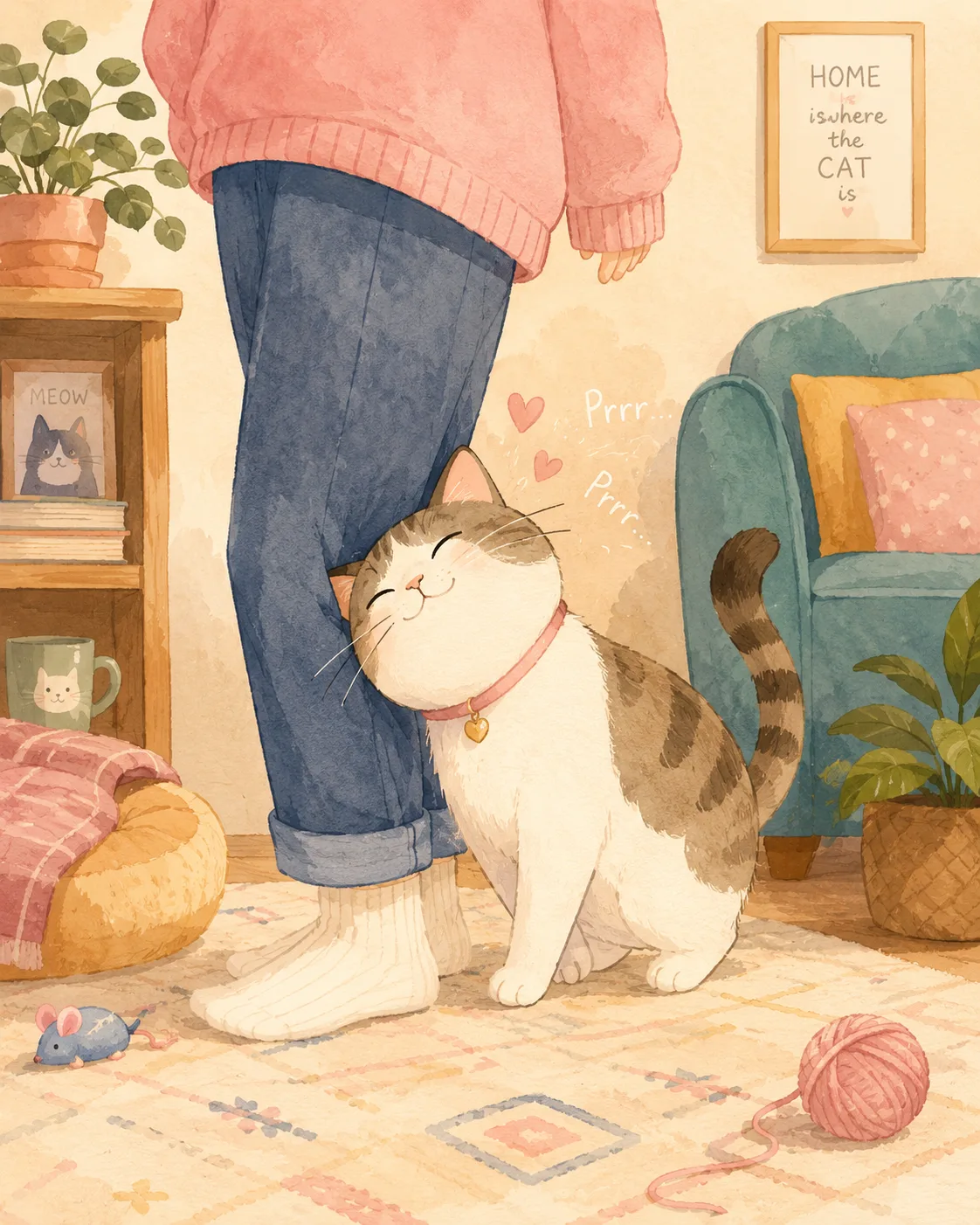
Ever had your cat walk up to you, gently press her face against your leg; or even your face; and rub like she’s polishing a piece of furniture? It feels affectionate, almost like a hug in feline language. But behind this sweet gesture lies a surprisingly complex system of communication that’s deeply rooted in instinct, biology, and social bonding.
This behavior, often called “bunting,” isn’t random or meaningless. It’s your cat’s way of speaking; just not in a language we instinctively understand. Cats don’t rely heavily on vocal communication like humans do. Instead, they use scent, subtle movements, and physical contact to express feelings, claim territory, and build relationships.
According to veterinary experts, cats have scent glands on their cheeks, chin, forehead, and even the base of their tail, and when they rub against you, they deposit pheromones; chemical signals that carry meaning . These signals are invisible to us but incredibly powerful in the feline world.
So, is your cat being affectionate… or claiming ownership? The answer is; both. Let’s unpack what’s really going on.
Understanding Cat Behavior at a Deeper Level
The Science of Feline Communication
Cats live in a world dominated by scent. While we humans rely heavily on sight and sound, cats navigate their environment through smell. Think of it like this: if your life were a movie, your cat’s life would be more like a scent-based map, filled with invisible markers telling her what’s safe, familiar, or threatening.
When your cat rubs her face on you, she’s essentially “writing” information onto you. This information includes identity, emotional state, and social connection. It’s not just about marking territory; it’s about building a shared environment where everything smells familiar and safe.
Interestingly, this behavior also helps cats gather information. When they rub against you, they’re not only leaving scent but also picking up yours. It’s like a two-way exchange, a silent handshake in chemical form.
Why Cats Rely on Scent More Than Sound
Cats evolved as both predators and prey, which made silent communication crucial for survival. Vocalizing too much could attract danger, so scent marking became a safer, more effective way to communicate.
Pheromones act like invisible messages. They can signal comfort, familiarity, ownership, or even emotional states. That’s why your cat may seem calmer after rubbing against you; she’s literally surrounding herself with her own reassuring scent.
The Meaning Behind Scent Marking Behavior
What “Bunting” Really Means
“Bunting” is the technical term for when a cat presses or rubs her head against you. It might look simple, but it’s actually a layered behavior with multiple meanings.
- It’s a greeting; like saying “Hey, I’m glad you’re here.
- It’s a claim; marking you as part of her world.
- It’s a bonding ritual; mixing scents to create a shared identity.
Veterinary sources confirm that cats use rubbing as a way to signal affection, greeting, and territory marking all at once .
How Cats Mark Territory vs. Social Bonds
Here’s where things get interesting. Not all marking is aggressive or defensive. There are two types:
| Type of Marking | Purpose | Emotional Tone |
|---|---|---|
| Territorial Marking | Claiming space or ownership | Neutral to protective |
| Social Marking | Bonding and creating familiarity | Positive and affectionate |

When your cat rubs her face on you, it’s usually social marking, not territorial dominance. She’s not saying “You belong to me” in a controlling way; she’s saying, “You’re part of my safe circle.”
How Cats Use Facial Glands to Communicate
Where These Glands Are Located
Cats have specialized scent glands concentrated in key areas:
- Cheeks
- Chin
- Forehead
- Lips
When your cat rubs her face on you, these glands release pheromones onto your skin or clothing. These chemicals are unique to each cat; almost like a fingerprint .
The Role of Pheromones in Messaging
Pheromones are like invisible text messages. They can communicate:
- This is safe
- This is mine
- I trust this person
What’s fascinating is that these messages aren’t just for other cats; they’re also for your cat herself. By surrounding herself with familiar scents, she creates a calming environment.

Moments When Cats Rub Their Face on You Most Often
Greeting Rituals
Have you noticed your cat doing this the moment you walk through the door? That’s not coincidence. It’s her version of saying, “Welcome back.”
Cats often reapply their scent after you’ve been outside, because your smell has changed. It’s like resetting your identity back into her world.
Feeding Time Signals
If your cat starts rubbing against you right before mealtime, she’s not just being affectionate; she’s communicating a need. Cats often combine scent marking with requests, like food or attention .
Reassurance and Comfort Moments
Cats also rub when they feel relaxed or want comfort. You might notice this during cuddles, quiet evenings, or when they’re slightly anxious. It’s a self-soothing behavior as much as it is social.
What This Behavior Says About Your Bond
Trust and Social Acceptance
When a cat rubs her face on you, she’s essentially saying, “You’re safe.” That’s a big deal. Cats don’t give trust easily; it’s earned over time.
Experts note that this behavior often means you’ve been accepted into your cat’s inner social circle .
Being Part of Your Cat’s “Colony”
Even though cats are often seen as solitary, they actually form social groups. In these groups, cats share scents to create a unified identity.
By rubbing against you, your cat is including you in her “colony scent.” You’re not just her owner; you’re part of her world.
Affection vs Territory Marking – What’s the Difference?
Emotional vs Instinctive Behavior
At first glance, it’s hard to tell whether your cat is being affectionate or just following instinct. The truth? It’s usually both.
Affection is expressed through:
- Relaxed body language
- Purring
- Slow blinking
Territorial marking, on the other hand, may be more repetitive and less interactive.
Signs to Tell Them Apart
| Behavior Clue | Likely Meaning |
|---|---|
| Gentle rubbing + purring | Affection |
| Quick, repeated rubbing on objects | Territory marking |
| Combined with meowing or leading you | Request (food/play) |
When This Habit Changes or Intensifies
Behavioral Changes to Watch For
If your cat suddenly starts rubbing excessively; on you, furniture, or walls; it could signal something beyond normal behavior.
Veterinary sources warn that increased rubbing may sometimes be linked to medical issues like allergies, ear infections, or neurological conditions .
Possible Health or Stress Indicators
Watch for these signs:
- Excessive scratching
- Hair loss
- Sudden aggression
- Confusion or disorientation
If you notice these alongside increased rubbing, it’s worth consulting a vet.
Conclusion
That gentle face rub your cat gives you? It’s not just cute; it’s meaningful. It’s a blend of instinct, communication, and genuine affection wrapped into one simple action.
Your cat is marking you, bonding with you, calming herself, and even talking to you; all at once. It’s her way of saying, “You’re mine, I trust you, and I feel safe with you.”
So next time she bumps her head into you, don’t just smile; understand that you’ve earned a place in her inner world. And in the mysterious language of cats, that’s one of the highest compliments you can get.
Related Reading: How Do You Stop A Dog From Whining In Crate Without Stress
FAQs
1. Why does my cat rub her face on my face specifically?
Because your face has strong scent cues and is close to hers, making it the perfect place to exchange pheromones and reinforce bonding.
2. Is face rubbing always a sign of affection?
Most of the time, yes; but it can also be a way to mark territory or communicate a need like hunger or attention.
3. Why does my cat rub more after I come home?
Your scent has changed while you were away, so your cat is “reclaiming” you by reapplying her scent.
4. Should I be worried if my cat rubs excessively?
If it’s sudden or paired with unusual symptoms like scratching or hair loss, it’s best to consult a veterinarian.
5. Do all cats show this behavior?
Most do, but the frequency depends on personality, socialization, and how bonded they feel with you.