
If you have ever dealt with a skunked dog, you already know this is not an ordinary smell. It doesn’t simply stink for a few hours and fade away. It clings to fur, skin, collars, blankets, furniture, and even the air around your home. That is because skunk spray contains sulfur-based compounds called thiols. These compounds are powerful, oily, and designed by nature to linger as a defense mechanism. In simple terms, the smell is built to be unforgettable.
Another reason skunk odor is hard to remove is that it bonds to oils on your dog’s coat. Dogs naturally produce skin oils, and many breeds have dense double coats that trap odor deep inside the fur. Splashing your dog with water right away may seem logical, but plain water often spreads the oily residue instead of neutralizing it. Think of it like trying to wash greasy hands without soap. You move the mess around more than you remove it.
Humidity can also reactivate the smell later. Many owners believe the odor is gone, only to notice it again when the dog gets wet in rain or after another bath. That happens because traces of the compounds remain hidden in the coat. Removing skunk smell successfully means breaking down the odor molecules, not just covering them up with perfume or shampoo.
Immediate Steps To Take After Exposure
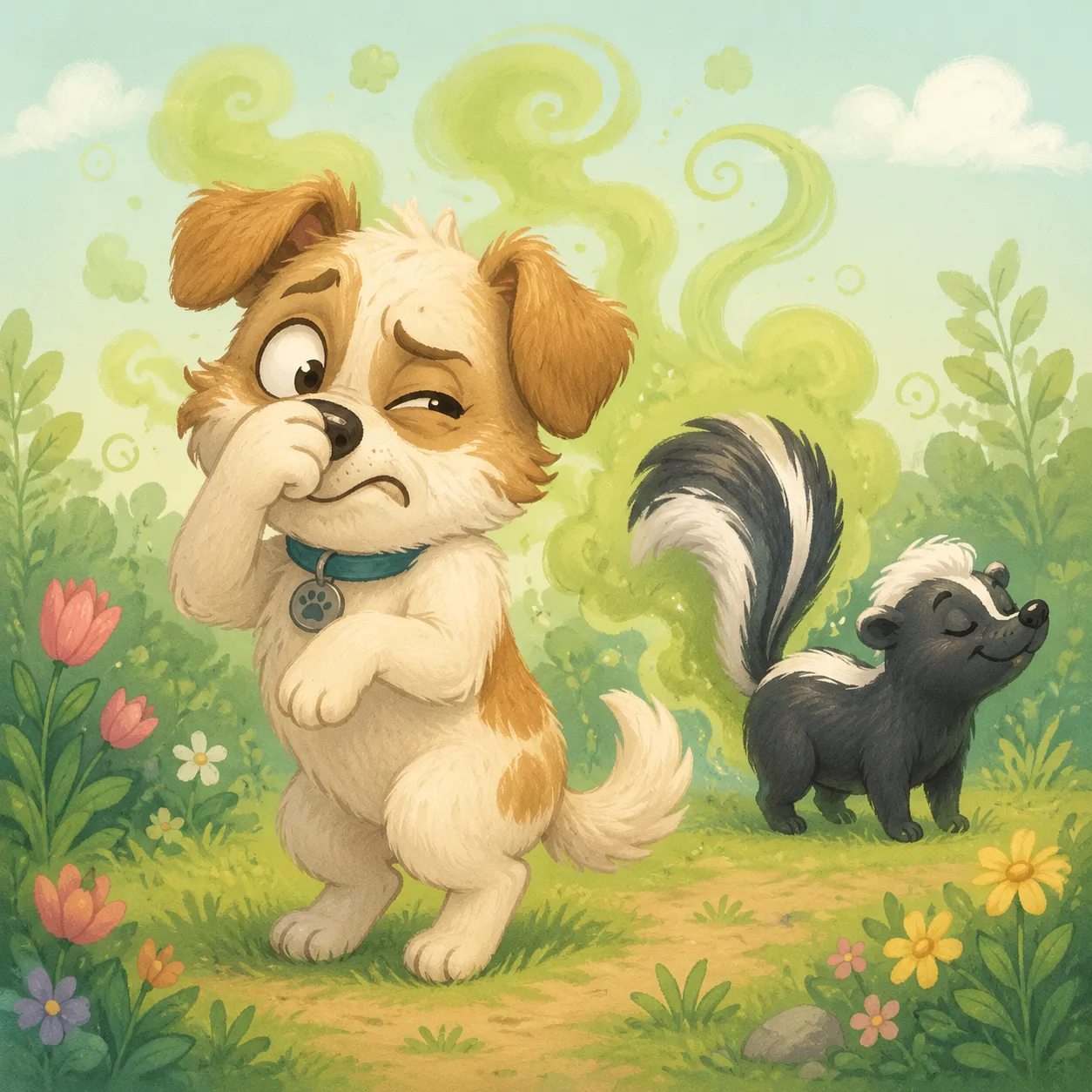
The first few minutes after a skunk encounter matter more than most people realize. If your dog runs inside the house immediately, the odor can transfer onto carpets, sofas, curtains, and walls. Your smartest move is to keep your dog outdoors or in an easy-to-clean area such as a garage or laundry room. It may feel cruel to delay cuddles, but it saves you from cleaning half the house later.
Check your dog’s face carefully. Skunks often aim for the eyes and muzzle. If the spray got into the eyes, redness, squinting, tearing, or pawing at the face can appear quickly. Flush the eyes gently with clean lukewarm water or sterile saline. If irritation continues, contact a veterinarian. Eye exposure should never be ignored because the chemicals can cause pain and inflammation.
Try not to let your dog roll on grass, furniture, or blankets. Rolling spreads the spray further into the coat. Put on old clothes and gloves before handling your pet. Remove the collar if possible, since collars absorb odor like a sponge. The key goal at this stage is simple: contain the mess, protect sensitive areas, and prepare for immediate treatment.
Effective Home Remedies That Work
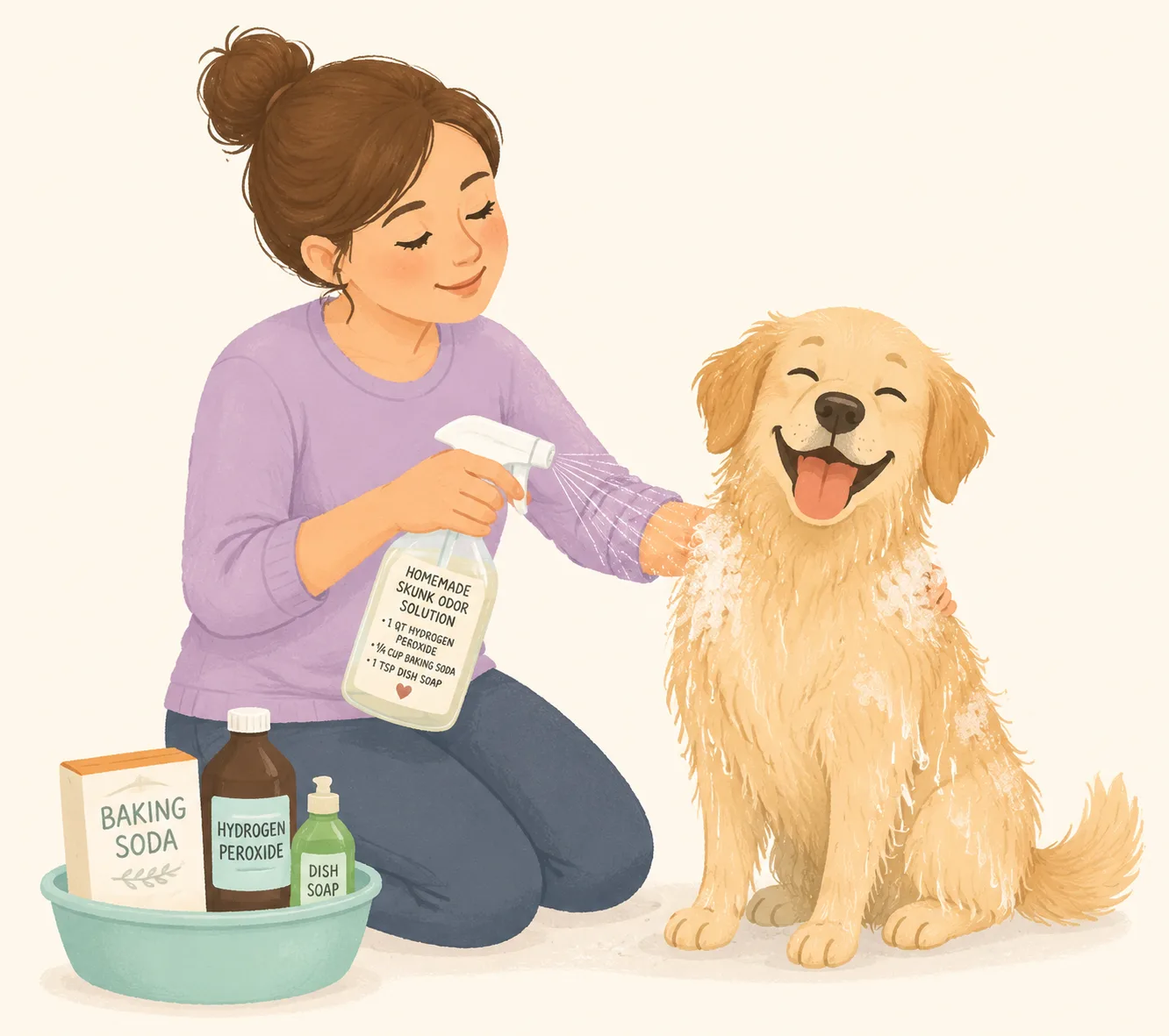
The most trusted home remedy for skunk smell on dogs uses three common ingredients: hydrogen peroxide, baking soda, and grease-cutting dish soap. This combination works because it helps oxidize odor compounds while lifting oily residue from the coat. A popular formula is:
| Ingredient | Amount |
|---|---|
| Hydrogen peroxide (3%) | 1 quart |
| Baking soda | 1/4 cup |
| Dish soap | 1–2 teaspoons |
Mix it fresh in an open container and use it immediately. Do not store leftovers in a sealed bottle because pressure can build up. Wet only the affected areas lightly if needed, then massage the solution into the coat while avoiding eyes, ears, nose, and mouth. Let it sit for about five minutes, then rinse thoroughly.
For mild residual odor, diluted white vinegar can help with surfaces and washable fabrics, though it is less effective than the peroxide mix on fur. Some pet-safe enzymatic odor removers can also help after the first treatment. The best results usually come from acting fast. Fresh skunk spray is easier to neutralize than dried residue that has sat for hours.
Ingredients To Avoid That Make It Worse
Many people still reach for tomato juice because it has been repeated for generations. The truth? Tomato juice may temporarily mask odor, but it rarely neutralizes the sulfur compounds causing the smell. Your dog may end up smelling like skunk and pasta sauce at the same time. It creates a mess without solving the problem.
Avoid bleach, ammonia, strong degreasers, or household disinfectants. These products can irritate skin, damage fur, and create dangerous fumes. Mixing chemicals carelessly is never worth the risk. Dogs lick themselves, and residues left behind can become another hazard.
Essential oils should also be used cautiously. Some oils that smell pleasant to humans can irritate dogs or even be toxic if concentrated. Covering up odor is not the same as removing it. Always focus on neutralization first, fragrance second. If a product is not clearly labeled pet-safe, skip it.
Bathing Techniques For Best Results
Good technique matters almost as much as the cleaning formula. Start by brushing away debris if your dog ran through bushes or dirt. Put cotton loosely in the ears if needed to reduce water entry, but never shove anything deep into the canal. Apply the deodorizing mixture directly where the spray landed most heavily; usually the face, neck, chest, or shoulders.
Work in sections. Massage the coat down to the skin using gloved hands. Thick-coated dogs need extra attention because odor hides under the outer layer. Use your fingers like combs, separating fur as you go. Be especially careful near the eyes. A soft cloth around the muzzle can help apply product safely.
After rinsing thoroughly, shampoo with a gentle dog shampoo and rinse again. Towel dry, then smell-check once dry. Wet fur can hide lingering odor. Some dogs need a second treatment the same day or another bath the next day. Persistence wins here. One rushed wash often leads to days of lingering smell.
Removing Odor From Surroundings And Fabrics
Even if you clean your dog perfectly, your job may not be over. If the dog entered the house first, fabrics likely trapped some odor. Wash blankets, towels, removable covers, and dog bedding in warm water with detergent plus a cup of baking soda or white vinegar added to the wash cycle. Air drying outdoors can help freshen items naturally.
For carpets and upholstery, blot rather than scrub. Scrubbing pushes odor deeper into fibers. Use a pet-safe enzymatic cleaner or a mild vinegar-water solution for spot treatment. Always test a hidden area first. Cars are another common trouble spot because upholstery absorbs smell quickly. Vacuum first, clean soft surfaces, and ventilate the vehicle well.
Open windows and use fans. Fresh airflow can make a huge difference. Activated charcoal odor absorbers may also help in enclosed spaces. Sometimes people focus only on the dog and forget the trail left behind. Clean both the source and the surroundings for complete success.
Preventing Future Encounters
Once you survive one skunk incident, prevention becomes very attractive. Skunks are usually active at dawn, dusk, and night. Keep dogs leashed during those hours, especially near brush piles, sheds, wood stacks, or areas with fallen fruit. These places attract insects and rodents, which attract skunks.
Secure trash lids and remove outdoor food bowls overnight. If you feed pets outside, leftovers can become an invitation. Motion-activated lights can discourage nighttime wildlife visits. Fencing can help, though skunks can squeeze through surprisingly small gaps.
Train a reliable recall command. If your dog freezes and stares at something striped in the yard, you want instant response. Curiosity is charming until it smells like disaster. Prevention is always easier than emergency bathing at 11 p.m.
When Professional Help Might Be Needed
Sometimes a skunk encounter becomes more than a smell problem. If your dog was sprayed in the eyes, is vomiting, drooling, coughing, struggling to breathe, or acting lethargic, call a veterinarian immediately. Some dogs have stronger reactions than others, and severe eye irritation or inhalation issues need prompt care.
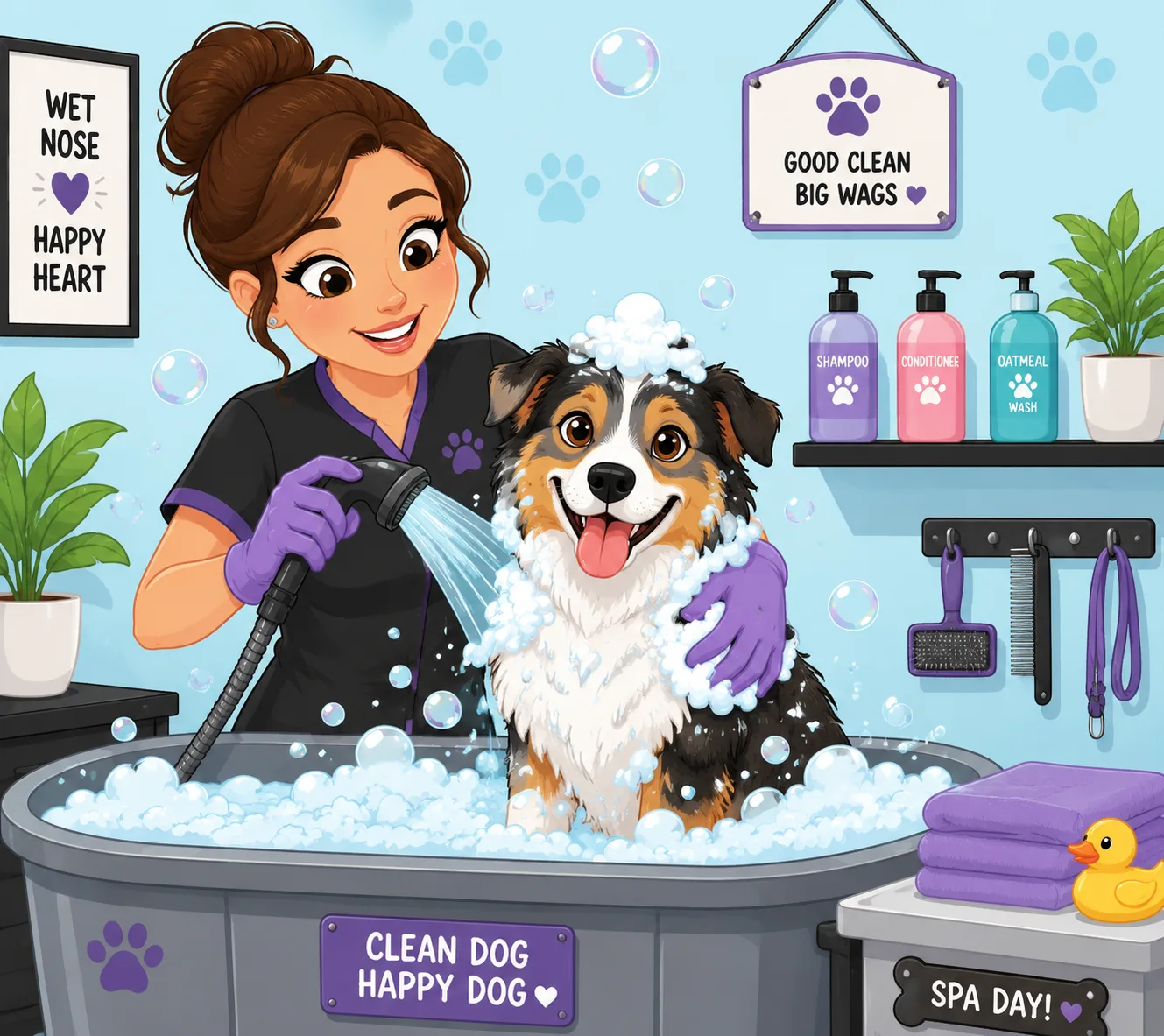
Professional groomers can help when coats are extremely thick, matted, or heavily saturated. Large breeds, anxious dogs, and double-coated dogs may be much easier to treat with professional equipment. Groomers often have deodorizing products and drying systems that outperform home setups.
If your house, car, or furniture still smells after repeated efforts, professional cleaning services may be worth the investment. Deep odors in porous materials can linger longer than expected. There is no shame in calling reinforcements when the smell refuses to surrender.
Conclusion
Getting the smell of skunk off your dog is one of those tasks nobody wants but many pet owners eventually face. The secret is speed, the right ingredients, and smart cleaning technique. Skip the myths, avoid harsh chemicals, and focus on breaking down the odor compounds instead of masking them. Clean your dog, then clean anything the dog touched.
Most importantly, learn from the experience. Better nighttime supervision, yard management, and leash habits can reduce future run-ins. One skunk lesson is usually enough for both dog and owner.
Discover Related: Why Do Cats Dip Their Paws In Water To Drink and What It Means
FAQs
1. How long does skunk smell last on a dog?
Without treatment, it can last for weeks and may return when the coat gets wet. Fast cleaning greatly reduces duration.
2. Can I use regular dog shampoo only?
Regular shampoo helps clean fur but usually does not neutralize skunk compounds effectively on its own.
3. Is tomato juice good for skunk smell?
It may mask odor briefly but is far less effective than peroxide-based deodorizing methods.
4. Can skunk spray make dogs sick?
Yes. Eye irritation, nausea, drooling, coughing, and discomfort can happen. Seek veterinary help if symptoms appear.
5. Why does the smell come back after bathing?
Residual compounds may remain deep in the coat and become noticeable again when moisture activates them.