
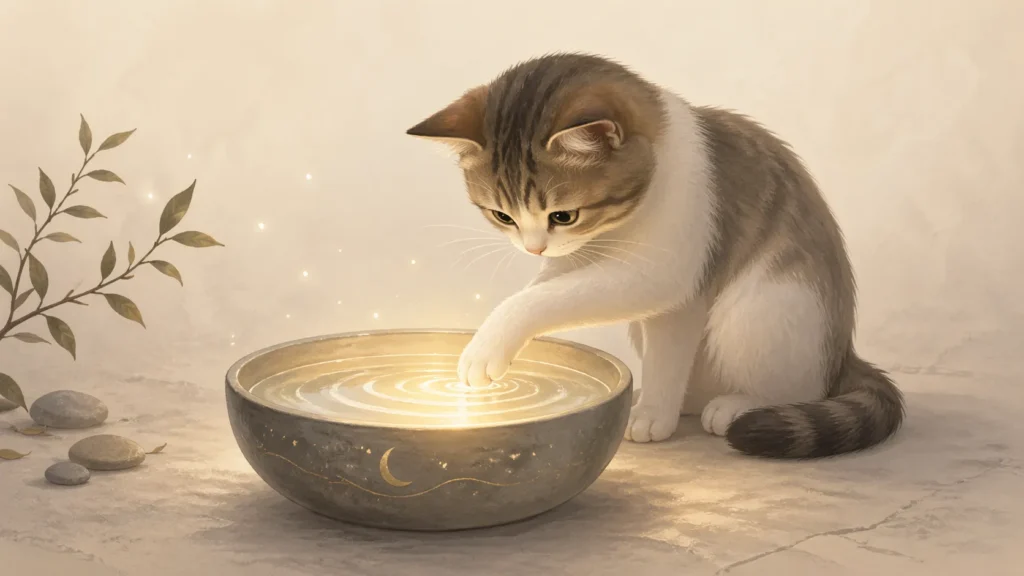
Before your cat takes a sip, have you ever noticed that tiny paw slide into the water bowl like it’s checking the temperature of a bath? It looks odd, adorable, and sometimes messy. But here’s the thing: cats rarely do anything without a reason.
This behavior isn’t random. It’s tied to instinct, sensory preferences, environmental awareness, and sometimes even physical discomfort. Recent veterinary behavior discussions and pet behavior analyses in 2025 point to several common explanations, including whisker sensitivity, water visibility issues, and an evolutionary preference for moving water.
What looks like a quirky habit is actually a window into how cats experience the world.
The Ancient Survival Instinct Behind Paw Dipping
If you strip away thousands of years of domestication, your fluffy couch companion is still running ancient software. That software says one thing about water: test it first.
Wild felines didn’t have filtered bowls in climate-controlled kitchens. They drank from puddles, streams, and standing water where danger could hide. Parasites, contamination, or even predators could turn a drink into a disaster. That instinct didn’t disappear just because your cat now lives indoors.
Behavior specialists often point to this evolutionary memory as one of the biggest reasons cats dip their paws into water before drinking. It’s essentially a “quality check.” Like dipping your toe into a swimming pool before diving in, cats use tactile information to verify safety.
And honestly? It makes sense.
Water is transparent. Still water can be visually deceptive. Cats evolved to trust movement more than stillness because moving water historically meant fresher, safer hydration. That’s why many cats prefer dripping faucets or pet fountains over bowls.
The paw dip creates ripples. Ripples create movement. Movement signals freshness.
It’s like their internal operating system saying: Okay, now this looks drinkable.
That tiny splash? It’s survival intelligence wearing a cute costume.
Why Still Water Feels Suspicious to Cats
Humans see a bowl of water and instantly recognize it.
Cats? Not always.
Feline vision is built for motion detection, not close-up detail. This means the still, flat surface of water can be surprisingly difficult for them to interpret. Think about staring at a sheet of glass; without reflection, it can be hard to judge where it starts or ends.
That’s exactly what happens with still water.
By dipping a paw, cats disturb the surface and create visual cues. Those ripples help define the water’s presence and depth.
Recent feline behavior reports in 2025 continue to highlight this sensory adaptation, noting that cats often use touch to supplement uncertain visual information.
It’s not clumsiness.
It’s strategy.
Imagine reaching into a dark room and using your hands to find the wall switch. That’s what paw dipping is; except wetter.
Cats rely heavily on certainty. Uncertainty makes them cautious.
Still water equals uncertainty.
Moving water equals information.
And information, in the animal kingdom, means safety.
So when your cat taps the bowl before drinking, they’re basically turning on the lights.
Sensory Preferences That Affect How Cats Drink
Cats experience drinking very differently than humans.
For us, hydration is simple: cup, sip, done.
For cats, drinking is sensory theater.
They process texture, movement, reflection, temperature, smell, and surrounding safety all at once. A water bowl isn’t just a water bowl; it’s an environmental event.
Some cats prefer cooler water. Some like elevation. Others demand moving water like tiny royalty.
Paw dipping often fits into this sensory matrix.
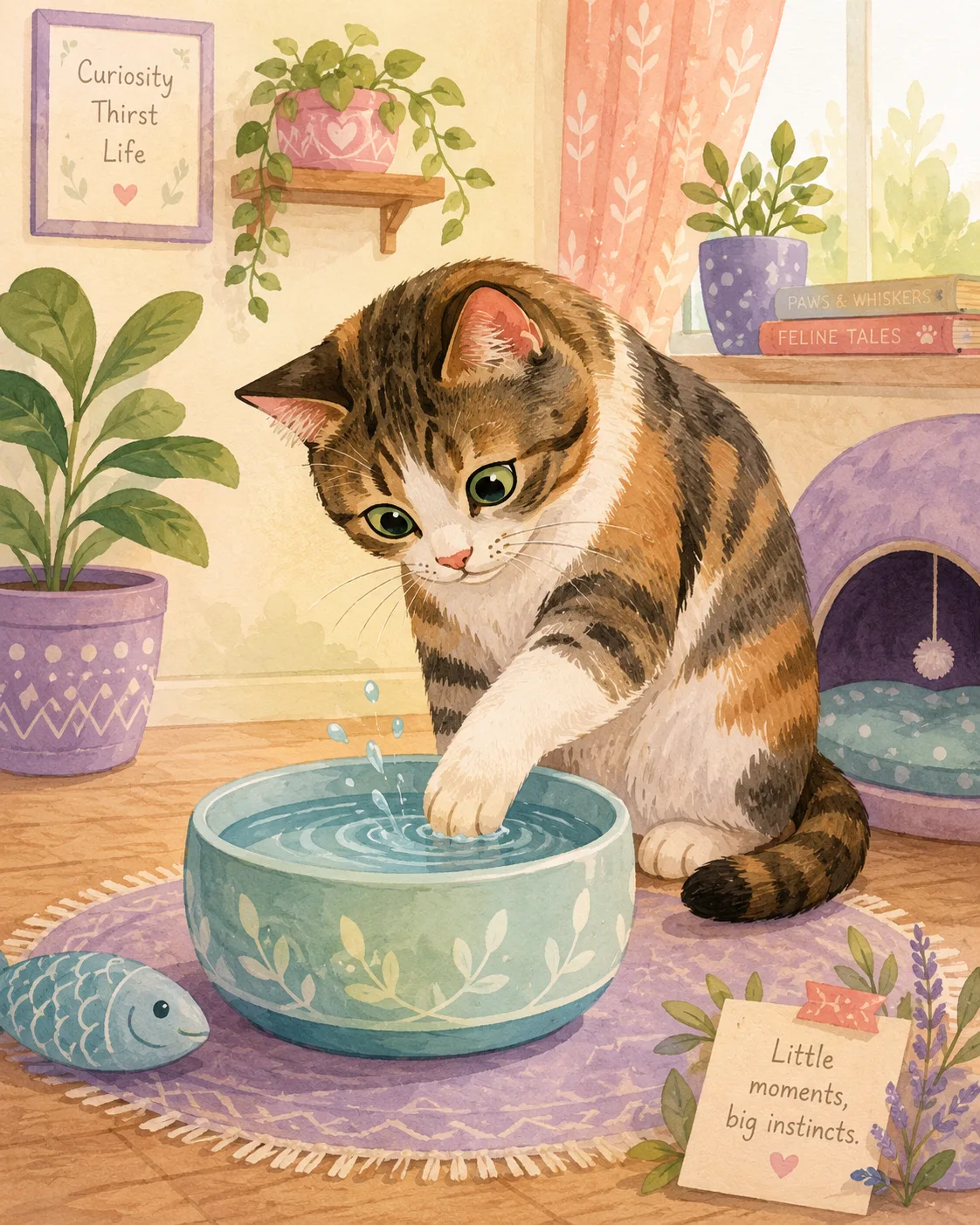
Touch is one of their most trusted senses. Their paws are incredibly sensitive and rich with nerve endings. A single dip gives them immediate data about:
| Sensory Factor | What the Cat Learns |
|---|---|
| Temperature | Is it fresh? |
| Depth | Is it safe to reach? |
| Movement | Is it stagnant? |
| Surface tension | Is it real water? |
That’s a lot of information from one paw tap.
Veterinary behavior experts note that this tactile exploration is especially common in cats with strong environmental sensitivity.
Cats aren’t being dramatic.
Well… not only dramatic.
They’re gathering data.
And in the feline world, data is everything.
The Connection Between Whiskers and Drinking Style
Let’s talk about whiskers.
They’re not just decorative facial accessories. A cat’s whiskers are advanced sensory tools packed with nerves that detect pressure, airflow, and space.
So what happens when those whiskers slam into the sides of a narrow bowl?
Discomfort.
This is where the term whisker stress or whisker fatigue enters the conversation.
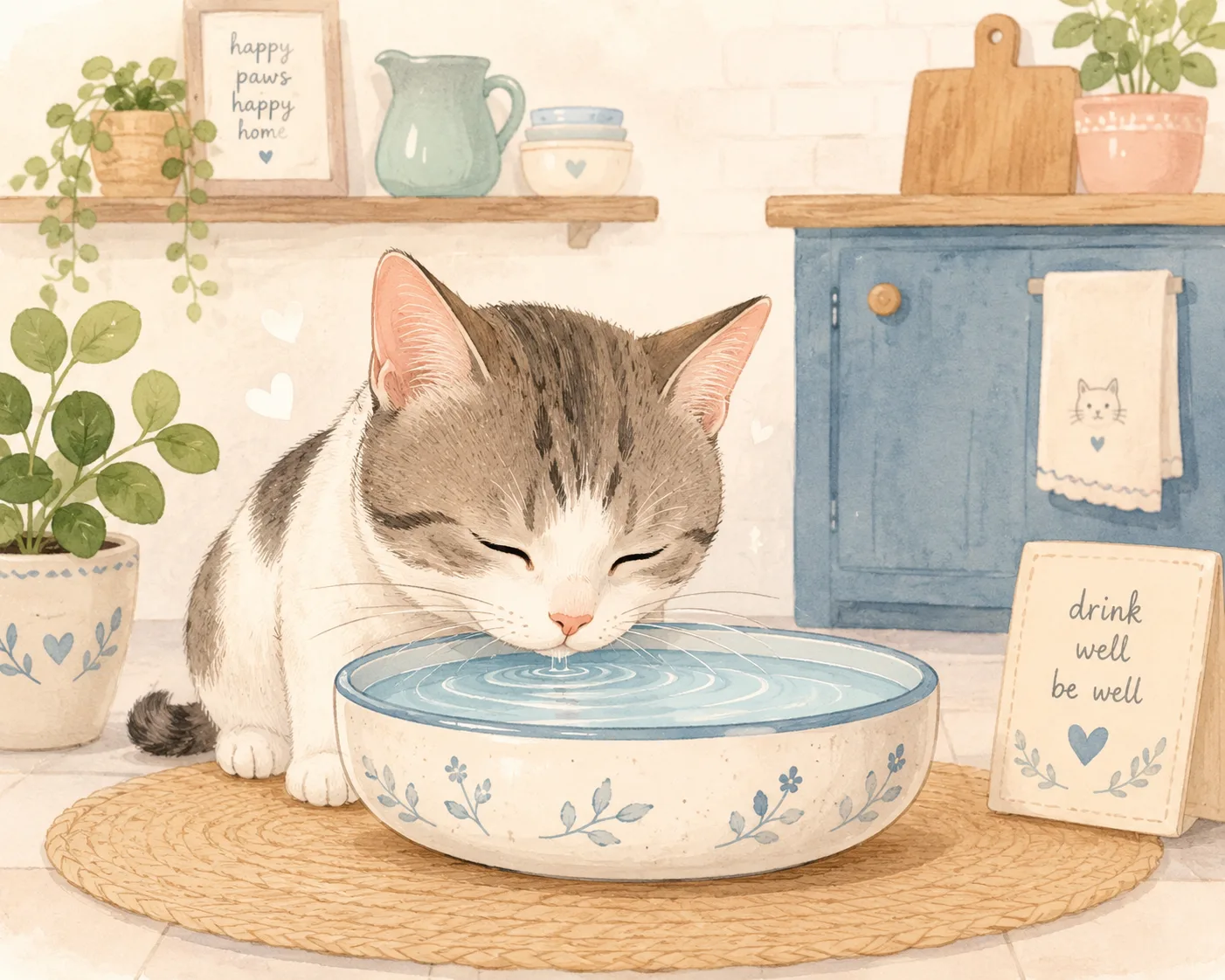
If a bowl is too deep or too narrow, cats may avoid lowering their faces into it because constant whisker contact feels overwhelming. Imagine trying to drink from a glass while someone pokes your cheeks repeatedly.
Not fun.
Instead, some cats adapt.
They scoop water with their paws and lick it off.
Problem solved.
Behavior observations consistently show that wider bowls reduce this habit in many cats. Even community discussions among cat owners strongly support the whisker sensitivity theory, with many reporting immediate improvement after switching bowl styles.
The takeaway?
Sometimes your cat isn’t weird.
Sometimes the bowl is the problem.
That’s a powerful shift in perspective.
How Bowl Shape and Placement Influence Behavior
Not all bowls are created equal.
A bowl that looks perfectly normal to you may feel completely wrong to your cat.
Here’s a quick comparison:
| Bowl Type | Likely Cat Reaction |
|---|---|
| Narrow and deep | More paw dipping |
| Wide and shallow | Easier direct drinking |
| Reflective metal | Can create glare |
| Ceramic wide bowl | Usually preferred |
Shape affects comfort.
Placement affects security.
Cats don’t love drinking with their backs exposed in vulnerable spaces. If the bowl is shoved into a corner or against a wall, they may feel trapped.
That can trigger unusual drinking behavior.
Some cats paw-dip because it allows them to stay alert while drinking. Head lowered equals reduced awareness. Paw drinking allows better environmental scanning.
Smart? Extremely.
Paranoid? Also yes.
Cats often prefer water bowls placed:
- Away from food
- Away from litter
- In open areas
- In quiet zones
Environmental comfort changes behavior fast.
Sometimes the fix is as simple as moving the bowl three feet.
That’s the kind of chaos cats thrive on.
When Paw Dipping Is a Sign of Play
Not every splash has deep psychological meaning.
Sometimes?
It’s just fun.
Cats are natural hunters. Water moves. Water reflects light. Water responds.
That’s irresistible.
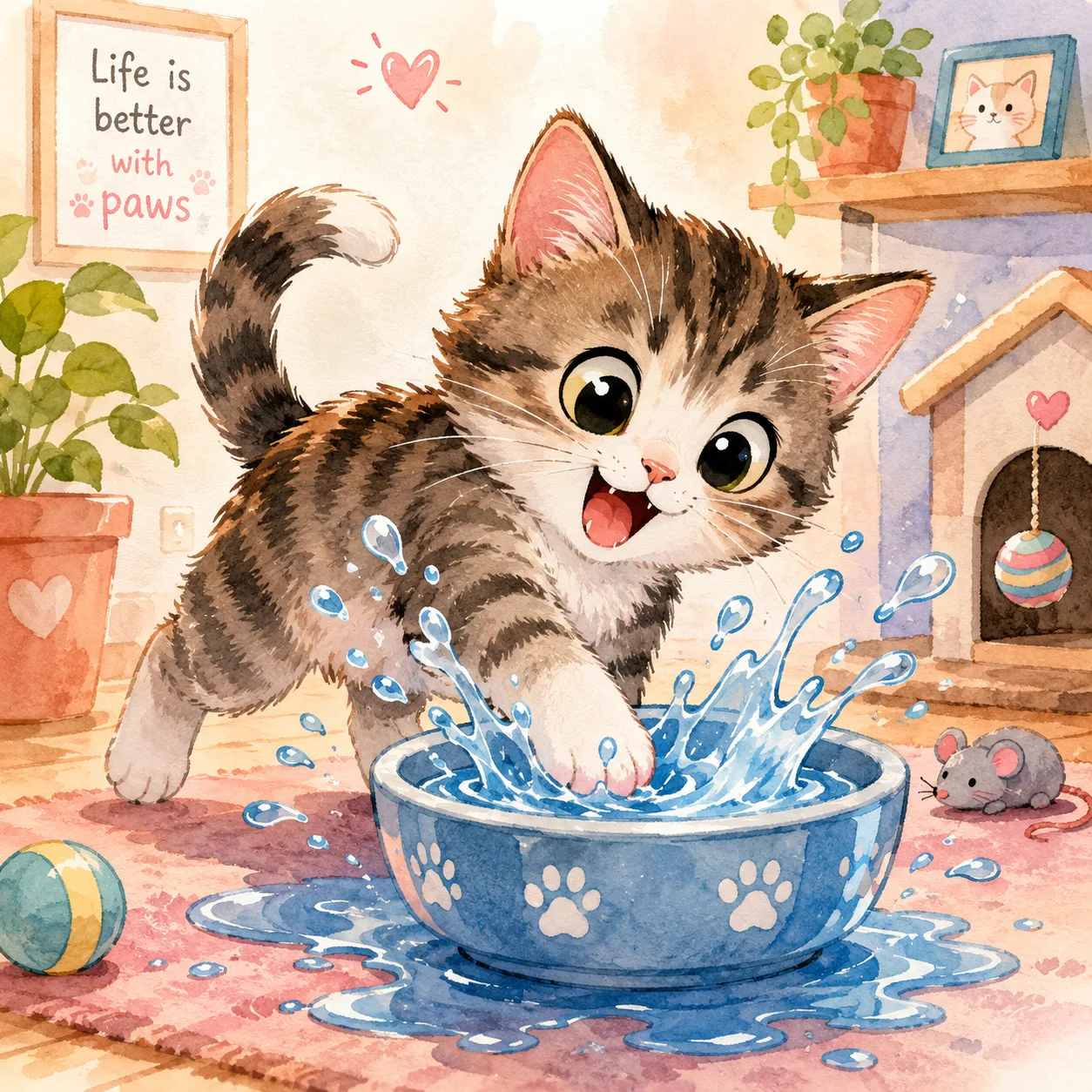
Kittens especially treat water like interactive entertainment. Tap it, watch it move, tap it again. It’s the original touchscreen.
Pet behavior specialists note playful paw dipping is especially common in younger cats with high curiosity and energy levels.
Signs it’s play:
- Repeated splashing
- Pouncing at water
- Knocking over bowls
- Returning when not thirsty
This is less about hydration and more about stimulation.
Think of it like a toddler stomping in puddles.
Is it practical? No.
Is it joyful? Absolutely.
If play is the cause, increasing environmental enrichment can help:
- Puzzle toys
- Climbing spaces
- Hunting games
- Scheduled play sessions
A bored cat will invent hobbies.
Sometimes that hobby is redecorating your floor with water.
When Paw Dipping Becomes a Necessity
Here’s where things shift.
If an older cat suddenly starts paw dipping after years of normal drinking, pay attention.
This may signal discomfort.
Conditions like arthritis can make bending the neck painful. Instead of lowering their head into the bowl, they scoop water upward.
It’s adaptation.
Not preference.
Veterinary guidance increasingly highlights mobility concerns in senior cats showing sudden changes in drinking posture.
Watch for:
- Stiff movement
- Hesitation before drinking
- Sitting while drinking
- Reduced appetite
Vision changes can also contribute.
Older cats may struggle more with depth perception or confidence around reflective surfaces.
Paw dipping becomes their workaround.
Like using a handrail on stairs.
Functional.
Necessary.
This doesn’t automatically mean something is wrong; but sudden behavioral changes deserve observation.
Behavior is communication.
Cats just happen to speak in weird little rituals.
Environmental Factors That Encourage Paw Dipping
Cats are environmental perfectionists.
Too much noise? Problem.
Water too close to food? Problem.
Busy hallway? Problem.
Strong smells nearby? Also a problem.
Their drinking habits are deeply influenced by context.
Studies in feline behavior repeatedly show cats prefer drinking stations separate from feeding zones. Their instincts tell them water near food may be contaminated.
Sounds strange to us.
Makes total sense in nature.
Environmental triggers for paw dipping include:
- Stress from nearby activity
- Dirty or stale water
- Bowl instability
- Uncomfortable flooring
- Sudden household changes
Cats often increase paw interaction when they’re uncertain.
It’s exploratory.
It’s calming.
It’s control.
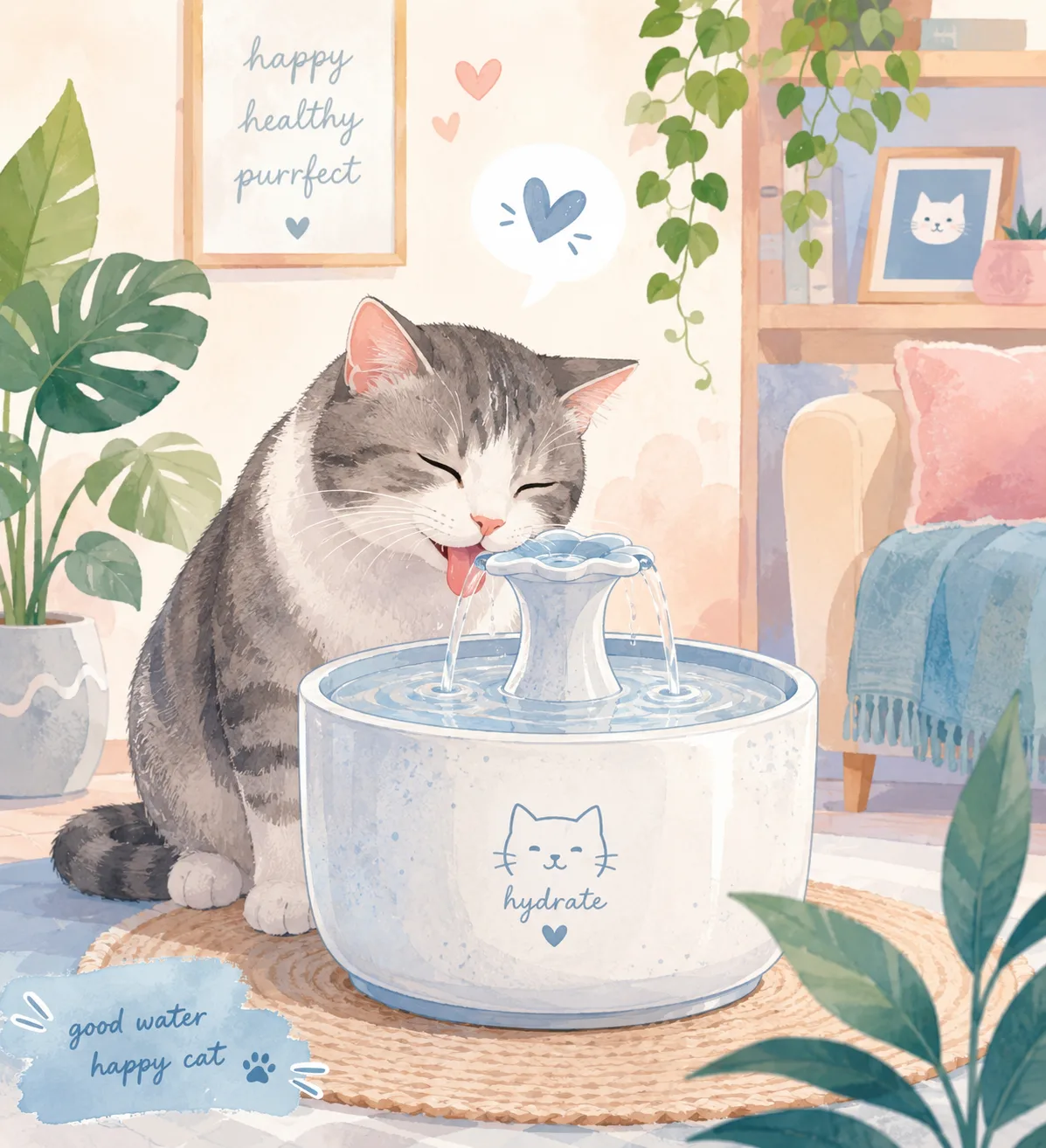
A moving water fountain often reduces paw dipping because it satisfies multiple preferences at once:
- Visible movement
- Fresher taste
- Better oxygenation
- Sensory appeal
Behavior experts frequently recommend fountains for habitual paw-dippers.
Sometimes the issue isn’t the cat.
It’s the environment.
And cats are masters at pointing that out.
Usually by making a mess.
Recommended Reading: Simple Methods for How Do You Get Dog Hair Out Of Car Seats Easily
Should You Be Concerned About This Behavior?
Short answer?
Usually no.
Paw dipping is often completely normal.
It becomes concerning when paired with other changes.
Here’s a simple breakdown:
| Behavior | Concern Level |
|---|---|
| Occasional paw dipping | Low |
| Playful splashing | Low |
| Sudden excessive dipping | Medium |
| Refusing water entirely | High |
| Drinking less overall | High |
Contact a veterinarian if you notice:
- Weight loss
- Lethargy
- Difficulty bending
- Increased thirst
- Reduced hydration
Hydration changes matter.
Cats are notoriously subtle about illness.
A strange drinking pattern can be the first clue.
But if your cat has always been a paw-drinker?
That’s probably just their signature style.
Like a person who eats pizza with a fork.
Unusual, but functional.
Small Adjustments That Can Change Their Habits
If you want to reduce paw dipping; or at least reduce the puddles; small changes can make a huge difference.
Try these:
Switch the Bowl
Use a wide, shallow ceramic or glass bowl.
This minimizes whisker contact.
Upgrade to a Fountain
Moving water satisfies instinctive preferences.
Many cats transition immediately.
Change Placement
Put the water in a quiet, open location.
Avoid corners and noisy appliances.
Keep Water Fresh
Cats can be water snobs.
Freshness matters.
Use a Stable Base
Sliding bowls create uncertainty.
Add a rubber mat underneath.
The goal isn’t to force “normal” drinking.
It’s to create comfortable drinking.
And comfort changes behavior faster than correction ever will.
Cats don’t respond to “stop doing that.”
They respond to “this feels better.”
That’s the language they understand.
Conclusion
A cat dipping its paw in water may look like a strange little ritual, but underneath that splash is a fascinating mix of instinct, sensory intelligence, environmental awareness, and physical adaptation.
Sometimes they’re testing the water.
Sometimes they’re avoiding whisker discomfort.
Sometimes they’re playing.
Sometimes they’re compensating for aging bodies.
The behavior itself isn’t the problem.
The context is what matters.
Understanding why cats dip their paws in water helps you build a better environment for them; one that respects how they naturally interact with the world.
And honestly?
That’s one of the best parts of living with cats.
They’re tiny mysteries with fur.
And every weird habit tells a story.
FAQs
1. Is it normal for cats to drink water from their paws?
Yes. It’s a common behavior linked to instinct, whisker sensitivity, or personal preference.
2. Do cats prefer moving water?
Many do. Their instincts associate moving water with freshness and safety.
3. Can bowl shape cause paw dipping?
Absolutely. Narrow or deep bowls can create whisker discomfort and encourage paw use.
4. Should I buy a water fountain for my cat?
If your cat frequently paw dips or seeks faucets, a fountain can be a great solution.
5. When should I worry about paw dipping?
If it starts suddenly alongside other symptoms like lethargy, pain, or reduced drinking, consult a veterinarian.